
-
It's hard to decide which is more surprising: that the largest U.S. bank has almost abandoned the business of making home loans insured by the Federal Housing Administration, that lots of big banks could be right behind it, or that the FHA might not even need to care.
 September 28
-
Fannie Mae has completed a credit risk sharing transaction that transfers the actual losses on mortgages it insures to reinsurers.
 September 28
 -
Lenders that allow borrowers to shop for third-party settlement services face new liability, as the Consumer Financial Protection Bureau's integrated mortgage disclosure rules will let borrowers sue over problems with vendor lists.
 September 25
-
A recent uptick in mortgage application defects might be reversing, according to First American Financial.
September 24 -
GOP presidential contender Jeb Bush unveiled a plan to reform the regulatory process, including at agencies like the Consumer Financial Protection Bureau.
 September 24
-
The Consumer Financial Protection Bureau's method for detecting disparate impact discrimination can overestimate potential bias, resulting in higher payments for lenders cited by the agency, according to internal CFPB documents.
 September 23
-
Benjamin Solomon, Deutsche Bank AG's former global head of securitized-product trading, accused the company in a lawsuit of firing him on frivolous and unjust grounds amid an industry focus on supervisors responsibilities.
September 23 -
The Securities and Exchange Commission has settled with Thomas Lund, the former head of Fannie Mae's single-family lending unit, for $10,000, according to news reports.
September 23 -
Although new HMDA data shows no negative effects from CFPB mortgage rules that went into effect last year, industry representatives argue it isn't showing the full picture.
 September 22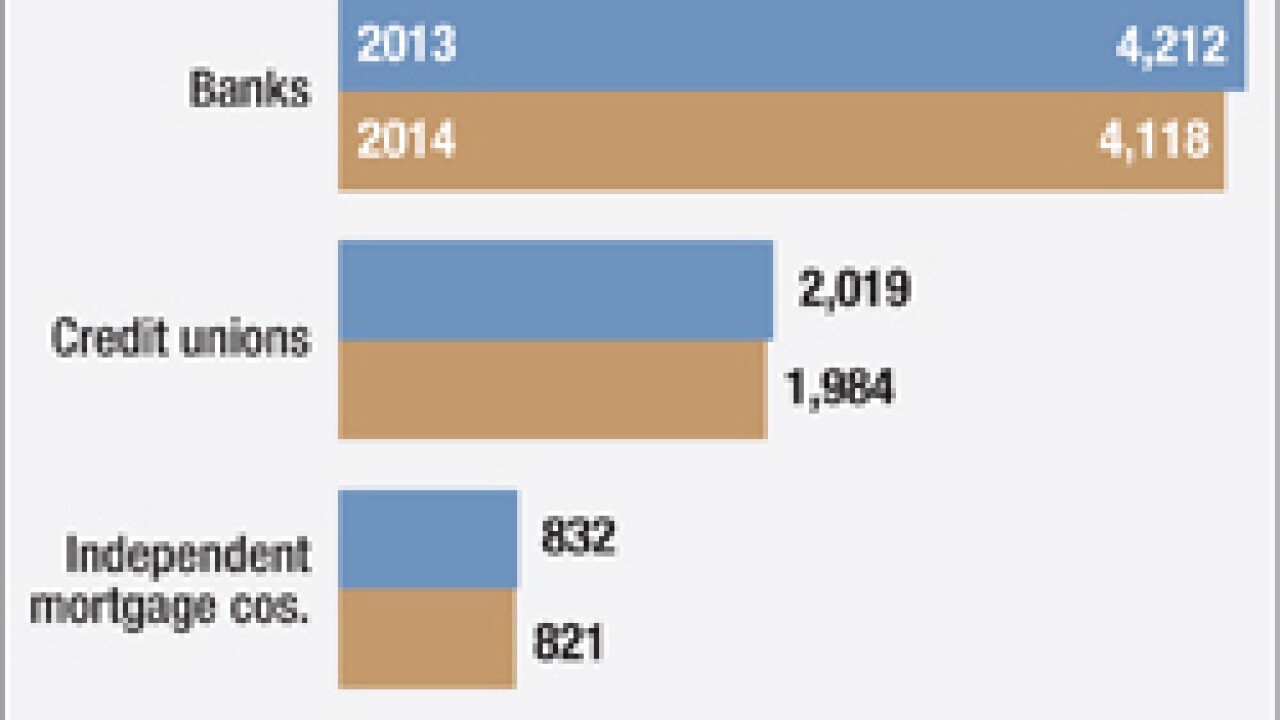
-
While Congress has been unable to pass housing finance reform, Fannie Mae and Freddie Mac have done a good job of adhering to some of the spirit of recent bipartisan legislation, according to Mark Zandi, chief economist at Moody's Analytics.
 September 22
-
Ginnie Mae may soon raise its liquidity and cash requirements for independent mortgage banking firms since it seems almost certain that Congress won't increase the agency's budget for fiscal year 2016.
September 22
-
The number of mortgage originations dropped 31% to 6 million in 2014 due largely to a decline in refinancing as interest rates increased, according to a report issued Tuesday by the Federal Financial Institutions Examination Council.
September 22 -
Despite pledges last year to move aggressively to implement new credit scoring models at the government-sponsored enterprises, the Federal Housing Finance Agencys effort appears to have stalled.
September 21
-
Lenders and vendors found no bad surprises in the Truth in Lending Act/Real Estate Settlement Procedures Act integrated disclosure exam guidance, but it didn't clarify much industry confusion either.
 September 18
-
Treasuries rallied with U.S. stocks, while the dollar tumbled to a three-week low after the Federal Reserve decided against curtailing stimulus that has helped propel the third-longest bull market since World War II.
September 17 -
Wells Fargo is raising minimum credit score requirements on Federal Housing Administration loans, part of the ongoing jockeying by large banks to limit lawsuits by the Justice Department for defective FHA loans.
September 17
-
Equifax has agreed to provide Fannie Mae with anonymous, loan-level FICO credit scores as part of its monthly disclosure program.
 September 16
 -
A report to examine the conditions surrounding last years unrest in Ferguson, Mo., is calling for officials to strengthen poor minority communities access to banking services and restrict the prevalence of predatory lending to reduce crime and poverty.
September 16
-
Loan performance has improved since the housing crisis. But credit challenges persist, while higher housing costs combined with a plateau in wages have put increased strain on some borrowers' finances.
September 15
-
Freddie Mac is making plans for its first risk-sharing transaction tied to actual losses on mortgages with higher loan-to-value ratios in the 80% to 95% range.
September 14


