
-
Mortgage rates posted a slight increase this week following the Federal Open Markets Committee's decision to boost short-term rates by 25 basis points, according to Freddie Mac.
 March 22
-
After increasing for nine consecutive weeks, mortgage rates dropped for the first time in 2018, according to Freddie Mac's Primary Mortgage Market Survey.
 March 15
-
Mortgage rates increased for the ninth consecutive week, moving in reaction to bond and stock market volatility.
March 8
-
The new Federal Reserve Board chairman's testimony in Congress was the driver of this week's mortgage rate increase, according to Freddie Mac.
March 1
-
The 30-year fixed mortgage rate moved up for the seventh consecutive week with further increases possible as bond yields rise over concerns about higher inflation.
February 22
-
The recent bond market volatility will cause mortgage rates to rise to a higher level than previously projected, according to Fannie Mae.
 February 15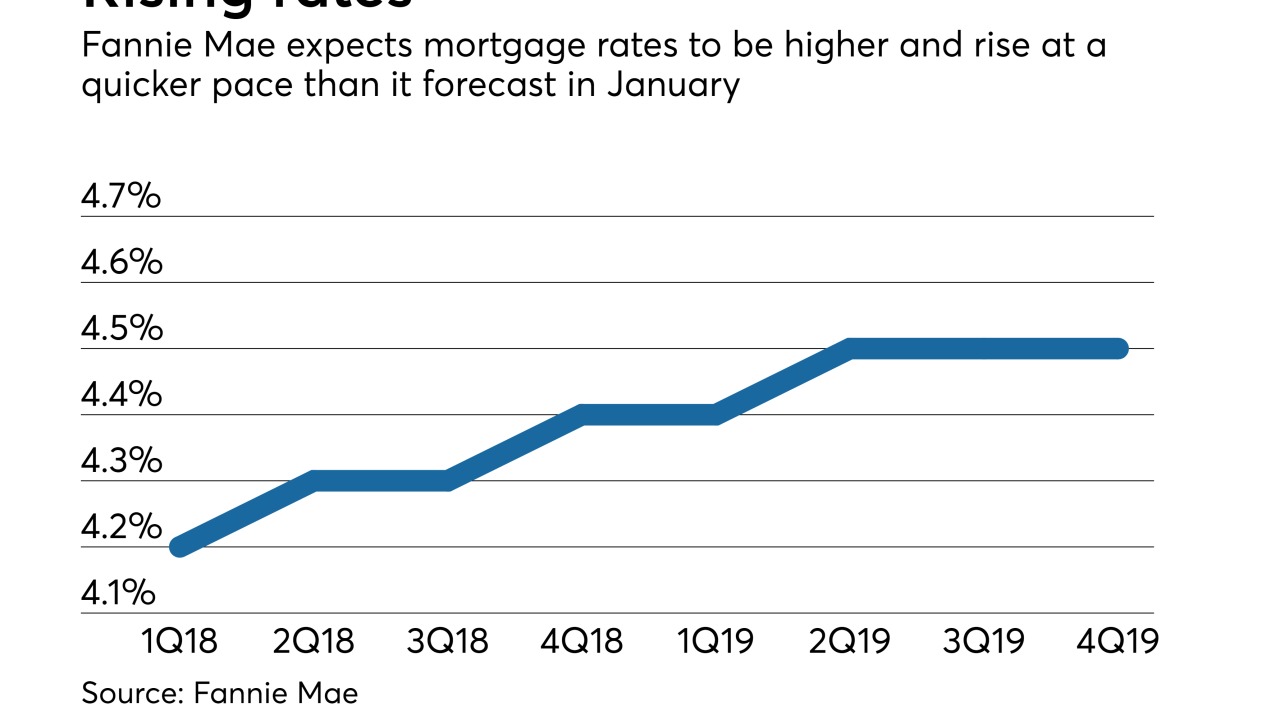
-
Mortgage rates rose to their highest level in almost four years, as worries over inflation drove the 10-year Treasury yield to just shy of 3%.
February 15
-
Mortgage rates hit their highest mark since December 2016 as bond yields were affected by the roller coaster stock market, according to Freddie Mac.
February 8
-
Mortgage rates, which are significantly higher since the start of the year, are likely to rise for weeks to come, according to Freddie Mac.
February 1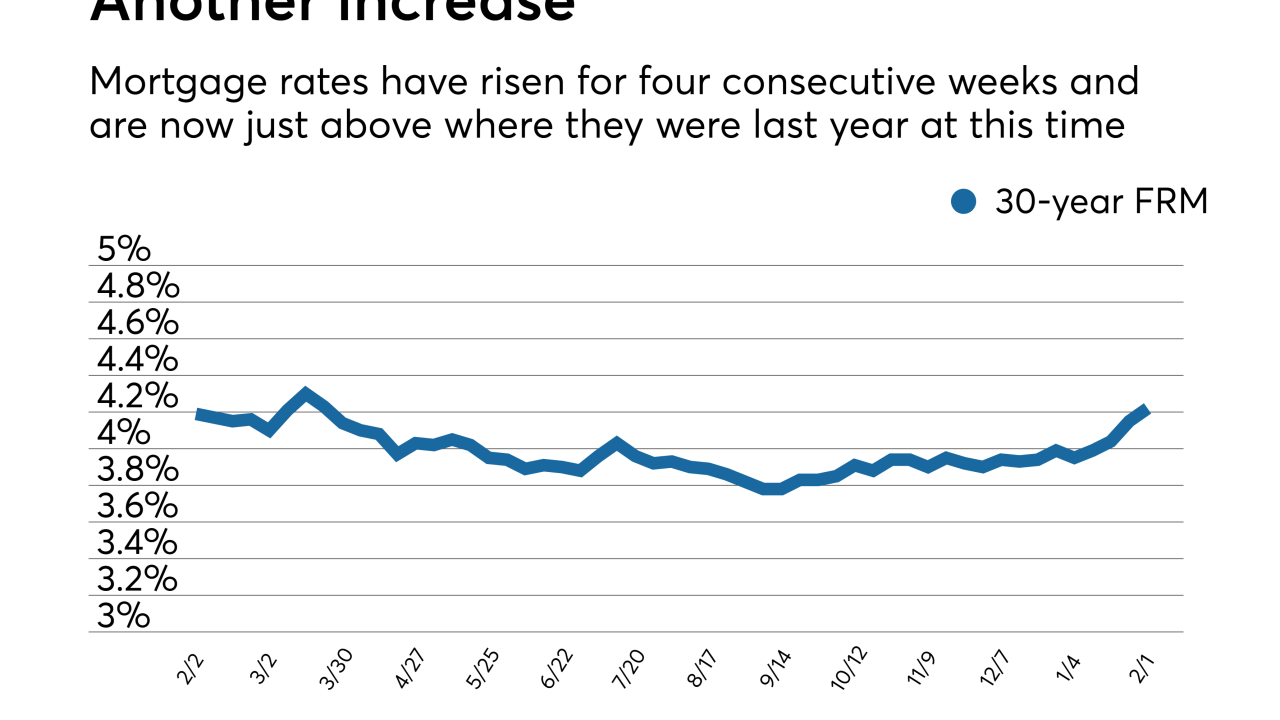
-
Mortgage rates rose for the third consecutive week and with expected continued economic growth, further increases are likely.
January 25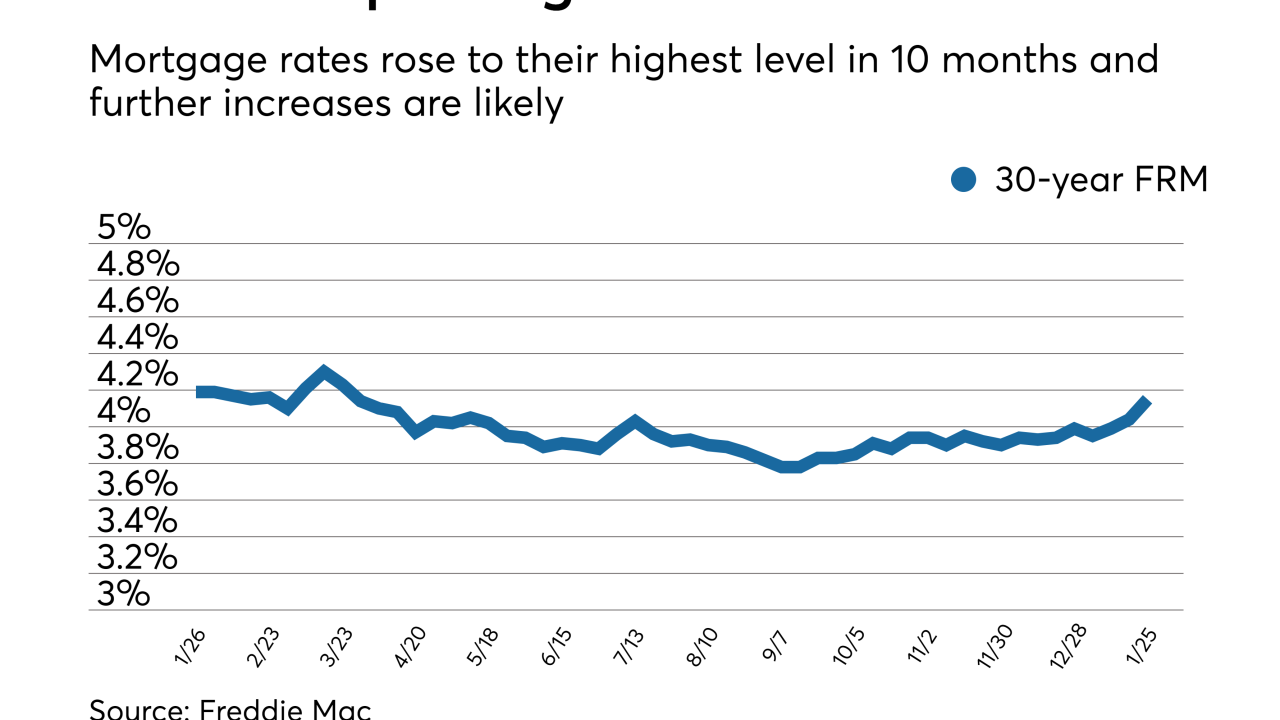
-
Given the improving U.S. economy, mortgage rates will probably not fall back under the 4% mark anytime soon.
January 18
-
Mortgage rates jumped across the board as investors sold some of their Treasury bond holdings, which led to higher yields, according to Freddie Mac.
January 11
-
Mortgage rates dropped to start the year as the markets had little new news to react on during the holiday period.
January 4
-
Mortgage rates rose to their highest level since the summer as predicted following Congress passing income tax reform, according to Freddie Mac.
December 28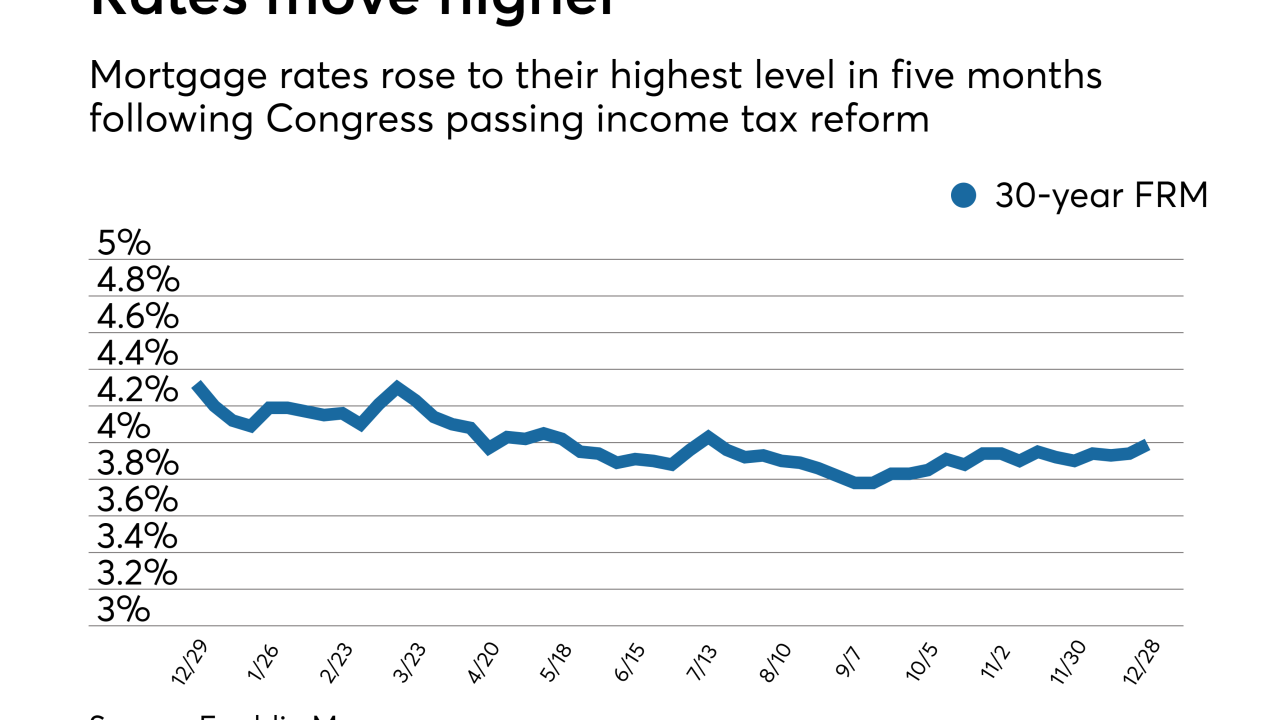
-
The tax reform bill Congress sent to President Trump's desk this week is likely to prompt at least a short-term spike in mortgage rates.
December 21
-
The mortgage market had already priced the Federal Open Market Committee's 25-basis-point hike into its rates so there was little change, according to Freddie Mac.
December 14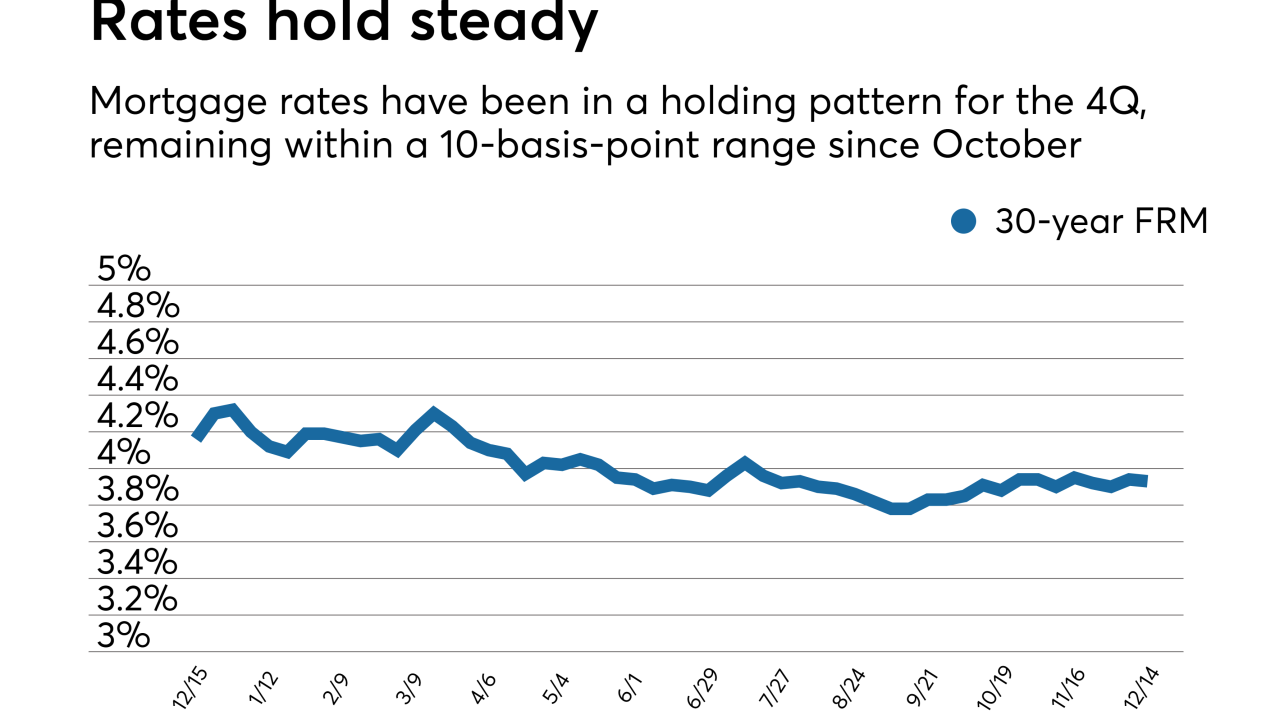
-
Mortgage rates ticked up this week, but a larger rise is possible next week depending on what Congress does about tax reform and the budget.
December 7
-
Mortgage rates moved lower this week, but strong economic data and comments by the outgoing Federal Reserve chair left many anticipating higher rates, according to Freddie Mac.
November 30
-
Mortgage rates ticked down this week after previously hitting their highest level since July, according to Freddie Mac.
November 22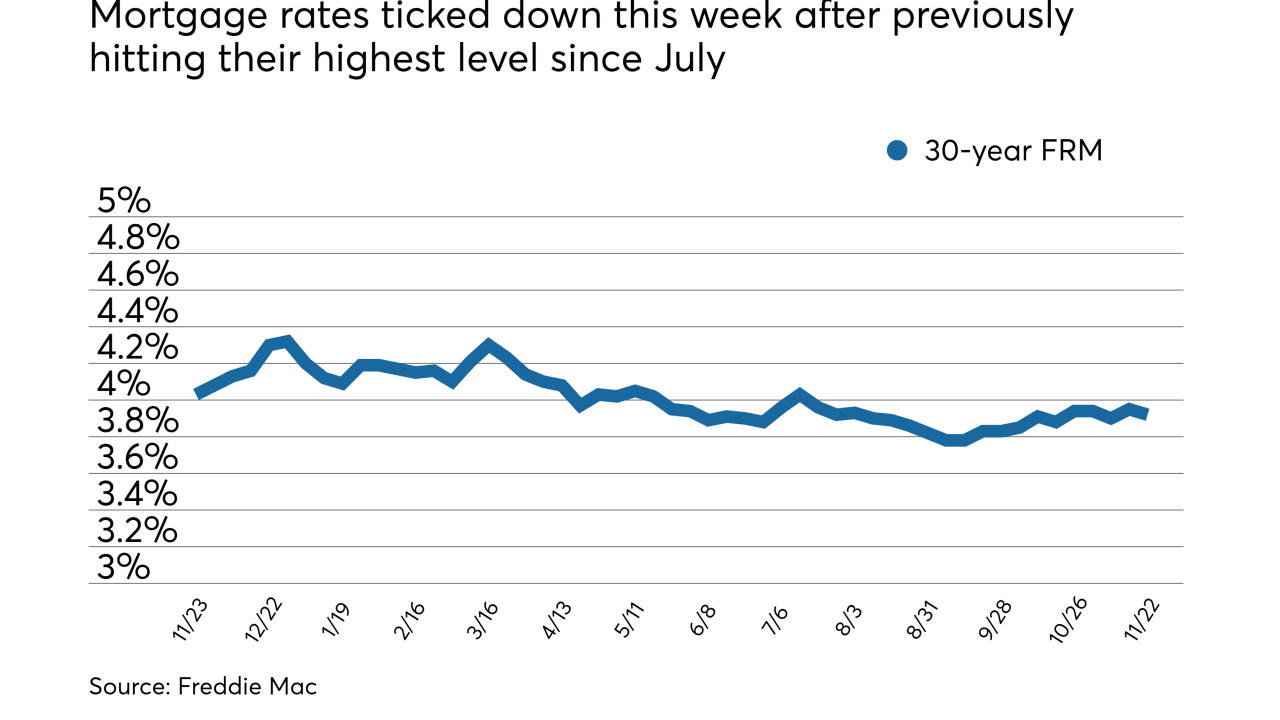
-
Mortgage rates moved to their highest mark since July and the 10-year Treasury yield ticked up 6 basis points, according to Freddie Mac.
November 16


