
-
The agency sought to provide certainty that most actions from the past eight years remain in effect despite the ruling that the bureau's leadership structure is unconstitutional.
 July 7
-
A lawsuit alleging Wells Fargo improperly compensated its California-based mortgage loan officers could have broader ramifications now that it has been granted class certification.
 February 8
-
CEO Tim Sloan and board chair Elizabeth Duke fielded tough questions Tuesday on everything from the embattled bank’s culture to its ties to the private prison industry.
 April 24
-
There's been a legislative bottleneck since the the crisis-era law went into effect, but Congress has moved forward on a handful of significant changes.
 March 6
-
The war of words between acting Consumer Financial Protection Bureau Director Mick Mulvaney and Sen. Elizabeth Warren, D-Mass., the agency's architect, is escalating.
February 23
-
The statutory clock on Mick Mulvaney serving as acting head of the Consumer Financial Protection Bureau is under a year, but the administration's path to getting a full-time director confirmed by the Senate has never looked rockier.
February 12
-
The agency has suffered a series of setbacks over the past two months, from a rollback of its arbitration rule to a legal battle over its leadership. Here's what happened — and where the agency might lose next.
 December 6
-
During the past year, many have hoped for action from Washington that would alleviate regulatory burden and stem the rapid pace of consolidation. But in the current political environment, that appears increasingly unlikely.
November 12
-
With little fanfare, President Trump officially nixed the rule prohibiting financial firms from including mandatory arbitration clauses.
 November 1
-
CFPB Director Richard Cordray sent a letter to President Trump Monday asking him to veto a Republican resolution to nullify the bureau's arbitration rule.
October 30
-
The stunning defeat of the Consumer Financial Protection Bureau's arbitration rule didn't have to happen, according to critics and former agency officials.
October 26
-
The Senate's repeal of the Consumer Financial Protection Bureau rule is arguably the industry's biggest policy victory since passage of Dodd-Frank. But is it the sign of a trend?
October 25
-
Republicans were able to use an obscure legislative process to overturn a rule that banks and credit unions feared would raise their litigation costs.
October 24
-
Consumer Financial Protection Bureau Director Richard Cordray pushed back against a Treasury Department report critical of the bureau's arbitration rule, saying it overlooked how class action lawsuits help consumers.
October 24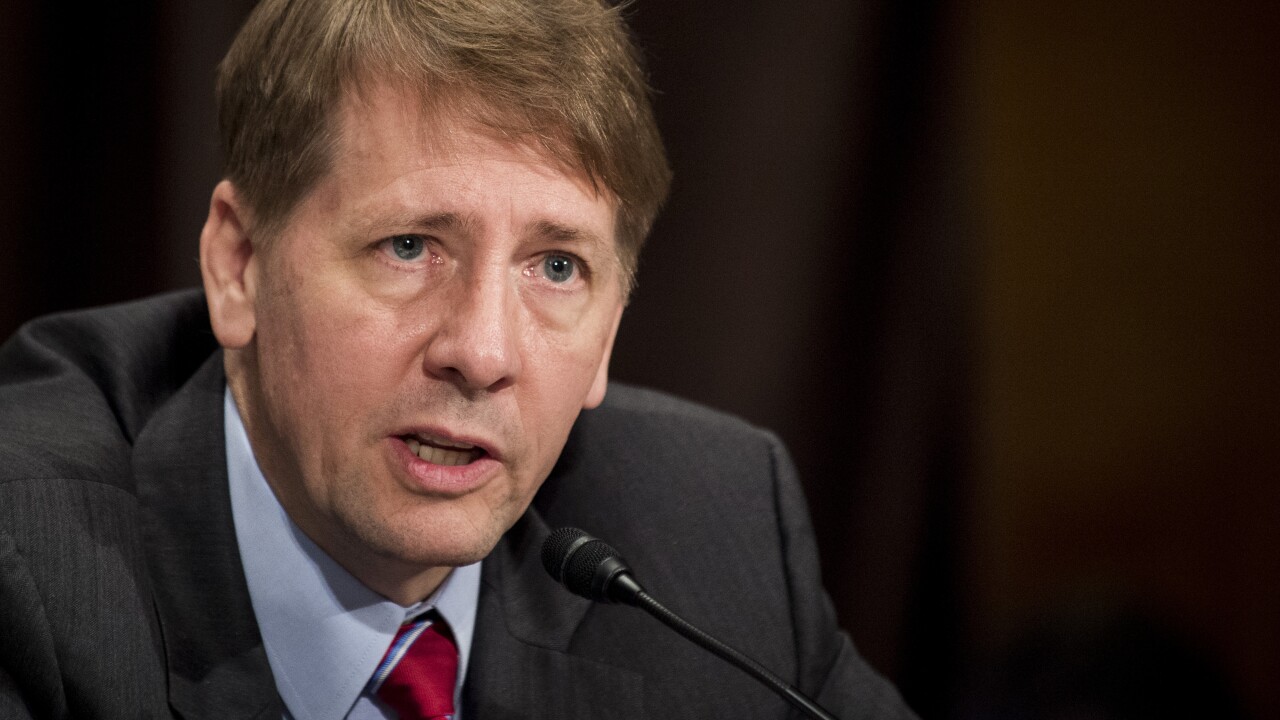
-
The GOP appears to have barely enough votes to roll back the contentious CFPB rule, and floor debate was expected to begin Tuesday with a final vote possible at any time. But victory was not assured, and the fallout could be significant for all sides.
October 24 -
With days ticking down for lawmakers to overturn the Consumer Financial Protection Bureau rule, some are now questioning the statistics used to challenge the bureau’s data.
October 23
-
The Treasury Department released an 18-page report saying the rule would “impose extraordinary costs” including legal fees mostly for lawyers that bring class-action lawsuits.
October 23
-
Regulators usually avoid the public fights that define other realms of the polarized Washington landscape, but the recent tiff over the arbitration rule is an exception.
October 18
-
The Office of the Comptroller of the Currency used "flawed statistics" and misstated the effects of the Consumer Financial Protection Bureau's arbitration rule on community banks, Director Richard Cordray said Friday.
October 13
-
In an op-ed, acting Comptroller of the Currency Keith Noreika argued that allowing consumers to sue financial institutions in class actions would raise credit costs and harm small banks.
October 13


