

-
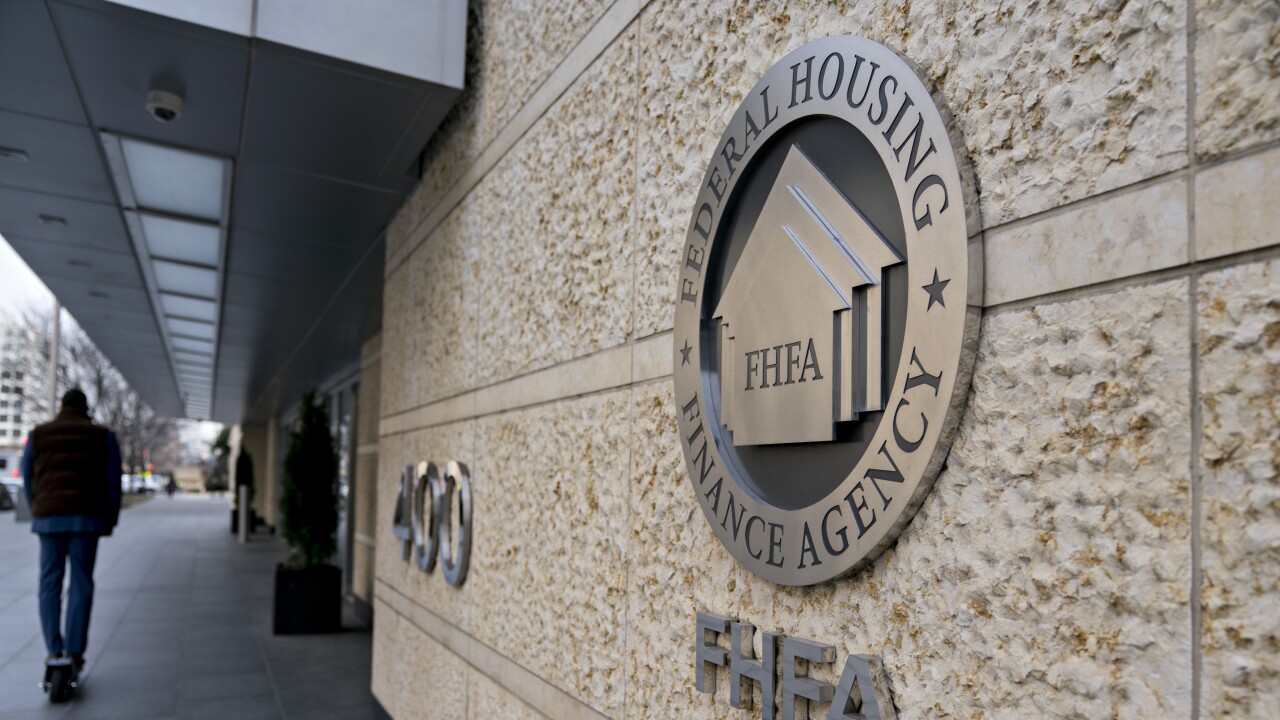
If put into force, the Federal Housing Finance Agency’s plan will severely impact the working capital and profitability of IMBs, and reduce volumes in the industry, Whalen argues.
March 7 -

This regulatory development is both good news and bad news, depending upon where you happen to sit in the mortgage process.
February 3 -

COVID loan forbearance championed by progressives has created a new, permanent class of distressed borrower, Whalen writes.
January 5 -

The Consumer Financial Protection Bureau seems to have been turned loose by Chopra in a redux of the bad old days under former director Richard Cordray, when the agency inflicted punishment on the mortgage industry often without any basis in fact, writes Whalen.
December 13 -
The Federal Housing Finance Agency should consider allowing small depositories — those defined by regulators to be below $10 billion in total assets — to again make use of structured transactions for seasoned, performing loans, writes the chairman of Whalen Global Advisors.
November 22 -

Last week, the world of mortgage servicing got an unpleasant surprise. Cenlar FSB, the nation’s largest subservicer of residential mortgages, was hit with a consent order by the Office of the Comptroller of the Currency alleging “unsafe and unsound” banking practices.
November 1 -

Kind Lending founder Gary Stearns told the National Association of Mortgage Brokers that the wholesale channel always feels the pain first in a slowdown and that changes were coming to the industry after a remarkable run, writes the chairman of Whalen Global Advisors.
October 10 -

The biggest issues facing the mortgage industry involve public policy and all of them feature a political narrative that is ill-informed and largely at odds with market realities, Whalen writes.
September 9 -

Regulators should create a simple liquidity formula that allows the secondary market to function rather than using depository rules as a model, writes the head of Whalen Global Advisors.
July 21 -

The more challenging operating environment for lenders means that expense management is coming back into vogue, writes Whalen.
July 9 -

The now-interim leader of the Federal Housing Finance Agency would give the mortgage industry much-needed stability following Calabria’s calamities, writes the head of Whalen Global Advisors.
June 24 -

The plan "is part of a larger democratic attack on home ownership that includes an increase in the taxes on capital gains as well as an end to 1031 exchanges for the sale of property," writes the head of Whalen Global Advisors.
May 27 -

For a lot of IMBs facing shrinking backlogs and falling secondary market spreads, the attraction of hitting a bid and taking the easy way out via an acquisition may become irresistible, writes Chris Whalen.
April 27 -

“Federal Housing Finance Authority Director Mark Calabria’s decisions to date are conservative and imply a slow death for the GSEs and IMBs operating in the conventional market,” analyst Chris Whalen writes.
April 5 -

And there are some brawls on the field affecting the direction of business for the rest of this year.
March 8 -

Both in terms of interest expense and the sheer cost of dealing with consumers, the mortgage industry is out hundreds of millions of dollars due to this unfunded mandate from Congress, analyst Chris Whalen says.
February 16 -

If new housing policy initiatives are not adopted by Congress, the Biden Administration may seek to push the GSEs into receivership, which would damage the conventional market, columnist and analyst Chris Whalen says.
January 25 -

Public agencies led by the Federal Reserve often stretch the definition of “necessary and proper” to the breaking point when seeking to fulfill public mandates, columnist Chris Whalen argues.
January 5 -

There are people creating a lot of unrealistic scenarios about market risk.
December 14 -

When new lending volumes start to recede, even with the FOMC’s actions, the shoals of credit and operational risk lurking just beneath the surface will emerge, columnist and analyst Chris Whalen says.
November 12


