
Federal Reserve
Federal Reserve
-

The lobbyist for the Home Loan Bank System has asked the Federal Deposit Insurance Corp. to confirm that the private consortium can continue to be a "lender of last resort," in direct conflict with the recommendations of its regulator, the Federal Housing Finance Agency.
December 1 -

All eyes are on the Federal Reserve and monetary policy. Join us as Scott Anderson, chief U.S. economist and managing director at BMO Economics, breaks down the latest FOMC meeting.
-

The financial services industry has run TV ads during football games and organized lobbying visits by small-business owners in its fight against the Basel III endgame plan to raise capital requirements for larger lenders. The tactics are beginning to show signs of working.
November 20 -

In her first remarks since the release of a sweeping report on the banks, Federal Housing Finance Agency Director Sandra Thompson urges them to strengthen underwriting and communication with their members' regulators.
November 20 -

Speaking at an event hosted by The Clearing House, the Federal Reserve's vice chair for supervision said he expects both instant payment processing systems to be widely adopted over time.
November 17 -

By the end of 2024 traders now see the U.S. central bank slashing rates by a full percentage point, despite officials repeatedly warning markets that they're in no rush to cut rates.
November 14 -

Policymakers are exercising restraint when it comes to the MBS portfolio for now but they'd still still like to sell, panelists at an industry conference said.
November 10 -

The 10-year Treasury yield crossed 5% for the first time in 16 years, propelled by expectations the Federal Reserve will maintain elevated interest rates and that the government will further boost bond sales to cover widening deficits.
October 23 -

Regulators will now accept feedback until Jan 16, 2024 — a six-week extension — concurrent with a Federal Reserve effort to gather additional information about the potential implications of the proposed capital changes.
October 20 -

The Federal Reserve is expected to pause at its September meeting. Jeff Timlin, a managing partner at Sage Advisory, will join us on Sept. 21 to provide analysis of the meeting.
-

The Federal Reserve Governor's remarks sounded somewhat less hawkish than her comments on Oct. 2, when she said multiple rate hikes would likely be needed to contain price pressures.
October 11 -

While individuals are piling into cash, for many portfolio managers the debate now is about how far to go in the other direction.
September 25 -

Federal Reserve Board Gov. Lisa Cook said artificial intelligence holds great promise for the economy, but stressed the importance of human choice in decision making, both financial and otherwise.
September 22 -

The Federal Reserve's rate hikes so far are just "catching up," the JPMorgan chairman and CEO says. Dimon predicts inflation will be at 4% early next year and "won't be coming down for a whole bunch of reasons."
September 21 -

Federal Reserve Chair Jerome Powell said today's high mortgage rates are dissuading some would-be sellers from putting their homes on the market, further limiting lending opportunities in an environment already constrained by low inventory
September 20 -

The FOMC held its target range for the federal funds rate at 5.25% to 5.5%, while updated quarterly projections showed 12 of 19 officials favored another rate hike in 2023, underscoring a desire to ensure inflation continues to decelerate.
September 20 -

The Federal Reserve has now offloaded about $1 trillion of its bond holdings since it began working down its bloated balance sheet last year, with no sign of the kinds of strains in financial markets that spooked policymakers the last time they oversaw such a program.
September 5 -
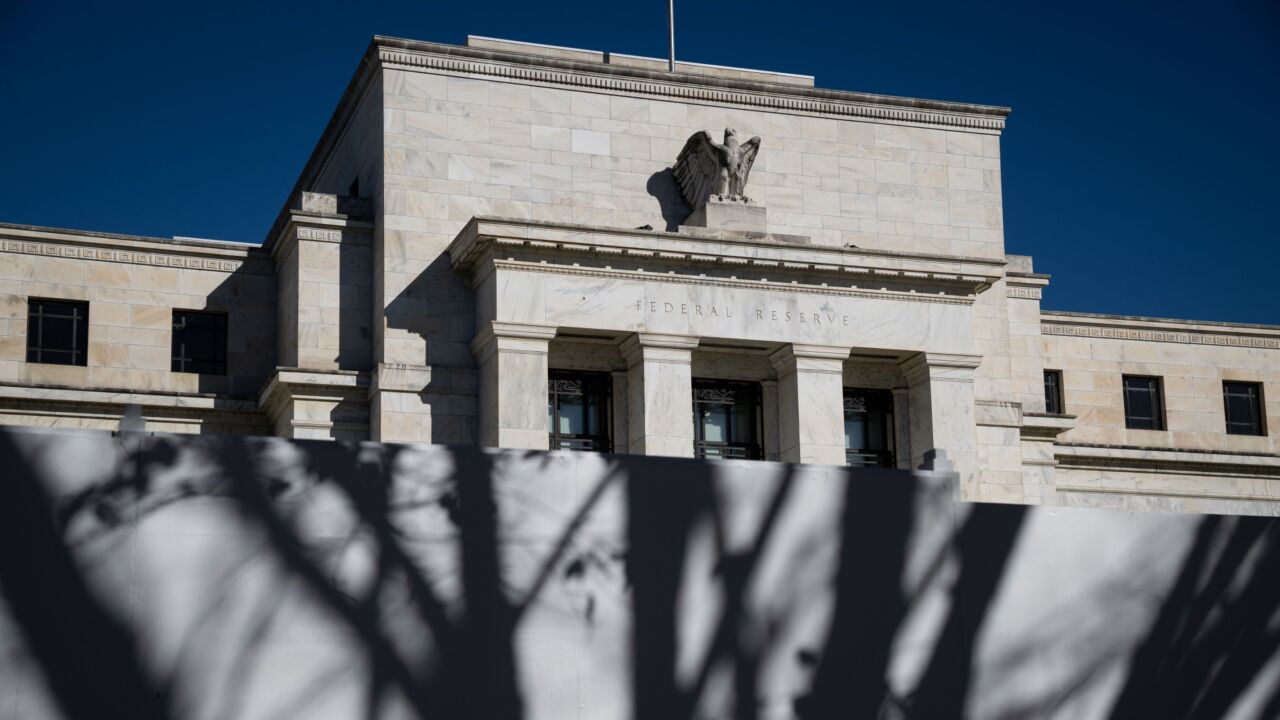
After remaining above $2 trillion for a year, the Federal Reserve's overnight reverse repurchase facility has seen steadily less use in recent months. The development is welcomed by banks, but could be a sign that certain financial players are shifting funds to riskier activities.
September 4 -

Demand-driven inflation will continue to be a problem in the U.S. economy until we somehow work through trillions of excess liquidity provided by the Federal Open Market Committee, writes the Chairman of Whalen Global Advisors.
August 21 -

A 2018 report laid the groundwork for the Biden administration's push to root out discrimination in home valuation. A counter study says no such practices exist.
August 17


