-
Counties in the West faced the least risk from pandemic distress in the third quarter, according to Attom Data Solutions.
 October 21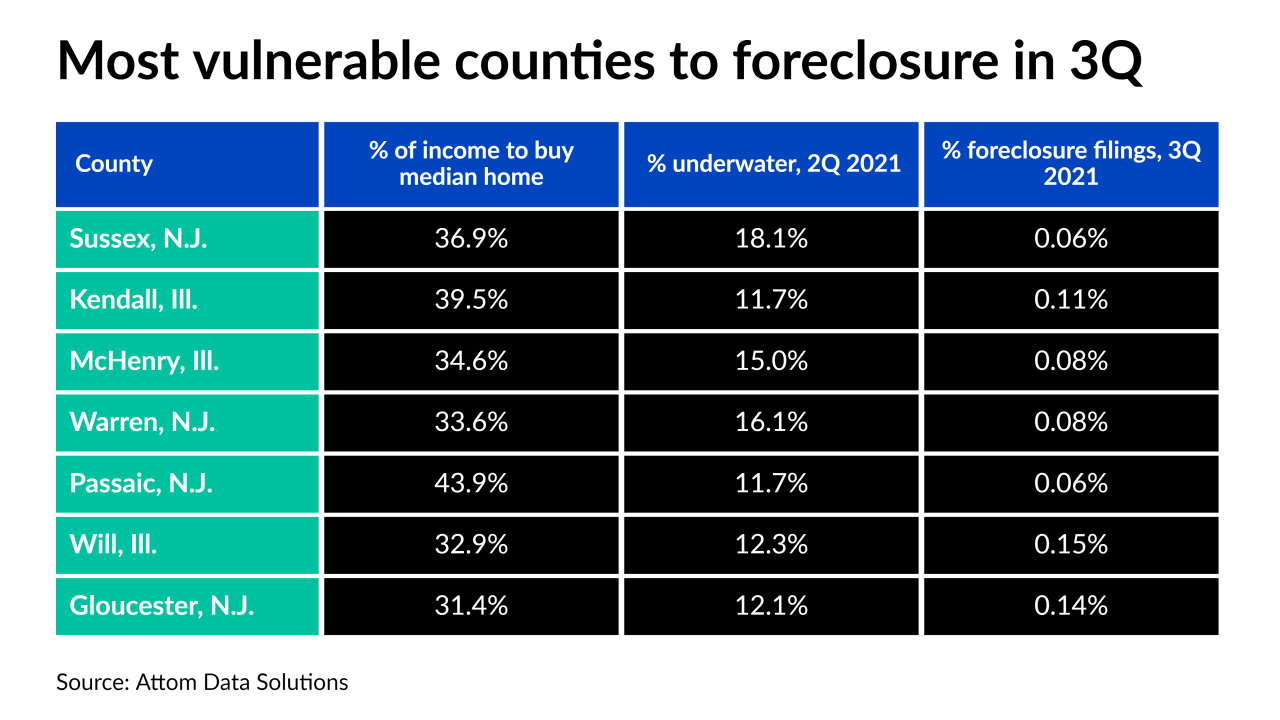
-
There is $900 million in debt on the land alone, including the $150 million junior loan that is for sale by Jones Lang LaSalle.
October 4
-
The rate at which borrowers went past due on their home loans showed near-term improvement in July, according to Black Knight, but servicers fear those who still have forborne payments won’t recover.
August 20
-
The most vulnerable areas all have the same things in common: relatively moderate price appreciation and affordability hurdles — either due to high home values or employment issues.
August 17
-
In a best-case scenario, the money could wipe out almost one-third of the pandemic-related increase in missed payments, but it won’t exclusively be used for that purpose.
 August 16
-
The agency developed measures taking effect Aug. 31 that, among other things, will allow lenders to prioritize foreclosures of the most impaired loans and then focus on modifying salvageable ones.
 August 11
-
Nearly half the country saw foreclosure starts rise year-over-year during the final month of the moratorium, according to Attom Data Solutions.
August 10
-
The congresswoman urged the Federal Housing Administration to double the six-month term it offers for more recent forbearance requests.
August 9
-
The number of people exiting pandemic-related payment suspensions starting in September will be daunting to process, according to a Black Knight report published Monday.
August 2
-
Concerns about foreclosure and a crowded market led to an increase in listings at lower price points in the second quarter.
July 30
-
The Federal Housing Administration, the agency that oversees government-sponsored enterprises Fannie Mae and Freddie Mac, and the VA extended additional relief to those living in single-family rental, real-estate owned properties.
July 30
-
The plan aims to cut monthly payments by roughly 25% for homeowners in government-backed mortgages who are negatively impacted by the pandemic.
July 23
-
The relatively low share of borrowers who were distressed in June adds to signs that the offramp from government relief measures may not lead to an overwhelming wave of foreclosures.
July 22
-
As the distribution of at-risk housing markets spread across more states quarter-over-quarter, vulnerable clusters remained around Chicago, New York and Philadelphia, an Attom Data report finds.
July 22
-
The meager increase suggests the largest boost in inventory possible would likely still leave the backlog of homes on the market at historic lows.
July 21
-
The return of more normalized numbers for two key players in the home loan market could be the lead-up to a wave that’s been anticipated since the coronavirus arrived.
July 14
-
Most troubled homeowners can avoid a long foreclosure process by selling and exiting with clean credit or even a profit, but a little under 2% may not have enough value in their property.
July 13
-
Identifying where payment stress is concentrated could help mortgage servicers and federal policymakers prepare for the broader range of loan workouts that will resume this summer.
July 8
-
The ruling confirms that a state precedent regarding forward mortgages also applies to home equity conversion loans.
 July 1
-
The Federal Housing Finance Agency addressed the period between the end of the federal foreclosure moratorium and the beginning of new Consumer Financial Protection Bureau directives as home loan companies expressed relief that requested exemptions from some foreclosure waiting periods were included.
June 29