
-
Strong economic trends like an improved employment outlook and rising homebuilder sentiment helped to drive average mortgage rates up 12 basis points from a week ago, according to Freddie Mac.
October 17
-
Most home sellers are stressed around issues involving time and money — two things they can't control — because those affect the purchase and financing of their next home, a Zillow survey found.
October 11
-
Weaker-than-expected economic data led to a decline in mortgage rates this week, although consumer attitudes remain strong, and should continue to drive increased home purchase demand, according to Freddie Mac.
October 10
-
Millennial homeowners and renters are more likely to stay in their home for a shorter period of time than similar aged people of previous generations, according to Zillow.
October 4
-
Economic issues were the biggest influence on average mortgage rates in the past week, although two trackers moved in different directions.
October 3
-
Home prices have more than recovered since the recession, but higher-than-ever medical and student debt is robbing many homeowners from realizing the benefits, while keeping others away from the market, according to Zillow.
October 1
-
In the decade ending in June, close to $9 trillion in additional owner-occupied real estate wealth was gained by U.S. households. Pacific states, led by California, grabbed 37% of this gain.
October 1
-
September has been the most volatile month since March when it comes to 30-year conforming mortgage rates, with average weekly movements of 11 basis points up or down, according to Freddie Mac.
September 26
-
Mortgage rates had their largest week-to-week uptick since October 2018 as bond market investors reacted to positive news about the economy, according to Freddie Mac.
September 19
-
Property values recovered, and in some cases even surpassed housing bubble peaks, but the same can't be said for waning new construction activity, which won't return to historic norms for years, according to Zillow.
September 16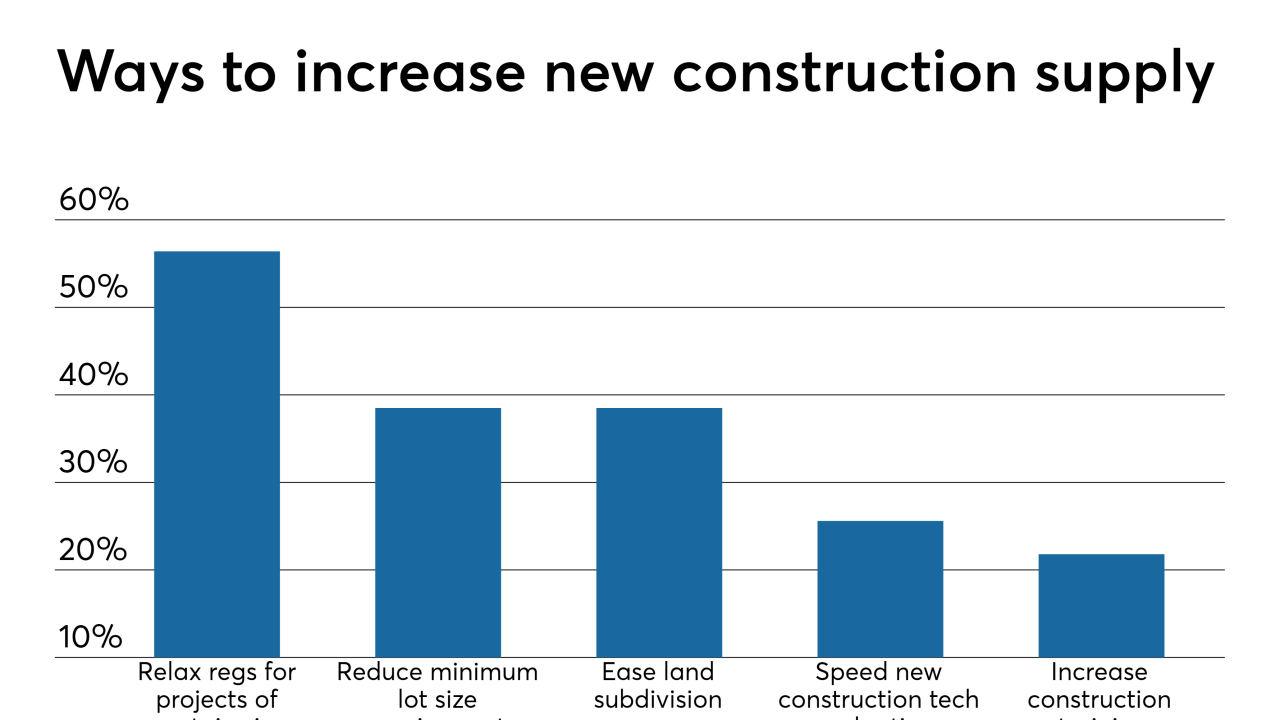
-
Mortgage rates rose seven basis points compared with the prior week, but remained below 3.6% over four consecutive weeks for the first time since the fourth quarter of 2016, according to Freddie Mac.
September 12
-
South Florida is the nation's capital of mortgage fraud, property data firm CoreLogic says.
September 12
-
Mortgage rates fell to lows not seen October 2016, affected by concerns over manufacturing and the ongoing trade war with China, according to Freddie Mac.
September 5
-
For the second month in a row, Seattle is the only major American city where home prices were lower than a year ago.
August 30
-
From consumers straying from certain cities to regulations dictating how homes are built, here’s a look at how climate change is shaping the housing market.
August 29
-
Mortgage rates remained near three-year lows last week, but their movement did not mirror the period's big shifts in the 10-year Treasury yield.
August 29
-
Mortgage rates continued to drop this week and hit their lowest levels since November 2016, while stimulating the real estate market and the economy, according to Freddie Mac.
August 22
-
While talks of an impending recession pick up steam, the housing market remains fairly stalwart and won't be to blame this time around, according to Zillow.
August 16
-
Mortgage rates remained unchanged this past week even with all of the upheaval in the bond markets that pushed long-term Treasury yields down, according to Freddie Mac.
August 15
-
The majority of young adults and consumers in coastal housing markets claim climate change will affect their homes or communities, which could influence where they consider buying a house, according to Zillow.
August 15


