
-
The uptick follows the pandemic-era trend of midmonth increases in active plans, according to Black Knight.
January 22
-
The pandemic-fueled exodus from New York City propelled nearby Westchester County to its strongest year for home sales in more than two decades.
January 15
-
Commercial real estate portfolios have held up better than expected during the pandemic. But rising delinquencies and fears of a delayed economic recovery are renewing questions about credit quality.
January 12
-
Rhode Island Housing and Mortgage Corp. is coming off its inaugural social bond issuance.
January 11
-
A slowdown in the increase of loans exiting forbearance “implies that those who were able to absorb the shock of the pandemic and get back on their feet, may have already done so,” said Andy Walden, Black Knight economist.
January 8
-
December’s housing market sentiment hit a seven-month low, indicating that inventory could be further constrained by sellers waiting for a better time to list, according to Fannie Mae.
January 7
-
While the balance of newly delinquent loans fell by 50% from November, the ratings agency warned that many borrowers will likely struggle to bring loans current under ongoing pandemic conditions.
January 5
-
The Fed’s decision to lower rates amid a pandemic proved serendipitous for home lenders who benefited from a refinance boom last year, but they may need to make adjustments in the coming months.
January 5
-
The recent stimulus law’s relief for renters and extension of the federal eviction ban were meant to ward off a housing crisis. But owners of 1- to 4-unit dwellings still face mounting mortgage and property tax debts, and delinquencies could start rising soon — followed by foreclosures.
January 4
-
With limited plan removals due to the holidays, mortgages in coronavirus-related forbearance rose by 15,000, according to Black Knight.
January 4
-
In the midst of the coronavirus pandemic, San Antonio's housing market is booming.
December 31
-
From the CARES Act’s effects to the spate of nonbanks going public, these developments stand to shape how the playing field looks in 2021.
December 31
-
The Federal Reserve is credited with containing damage to the financial system from the coronavirus pandemic, but experts say the limits of the central bank’s power to prop up the economy will likely become more apparent in the new year.
December 28
-
The forbearance rate rose behind slowed economic recovery, according to the Mortgage Bankers Association.
December 21
-
The new bill ordering $600 stimulus checks and $25 billion in emergency rental assistance won't be enough to help millions of Americans struggling to make housing payments, according to industry watchers.
December 21
-
The company expects a good year ahead for mortgage insurers, assuming that rising employment, higher home prices and payment timing deferrals will help them to mitigate risk.
December 18
-
Bank and credit union groups are pushing to include the industry’s front-line workers in the next priority group, but even as a recommendation is coming soon from a CDC advisory panel, the decision ultimately will be made state by state.
December 18
-
With infection rates rising and unemployment claims increasing since Thanksgiving, mortgages in coronavirus-related forbearance rose by 37,000 last week, according to Black Knight.
December 18
-
The Federal Reserve has already agreed to shut down emergency credit programs funded by the Coronavirus Aid, Relief and Economic Security Act, but Sen. Pat Toomey, R-Pa., and others want Congress to ensure the central bank cannot revive them.
December 17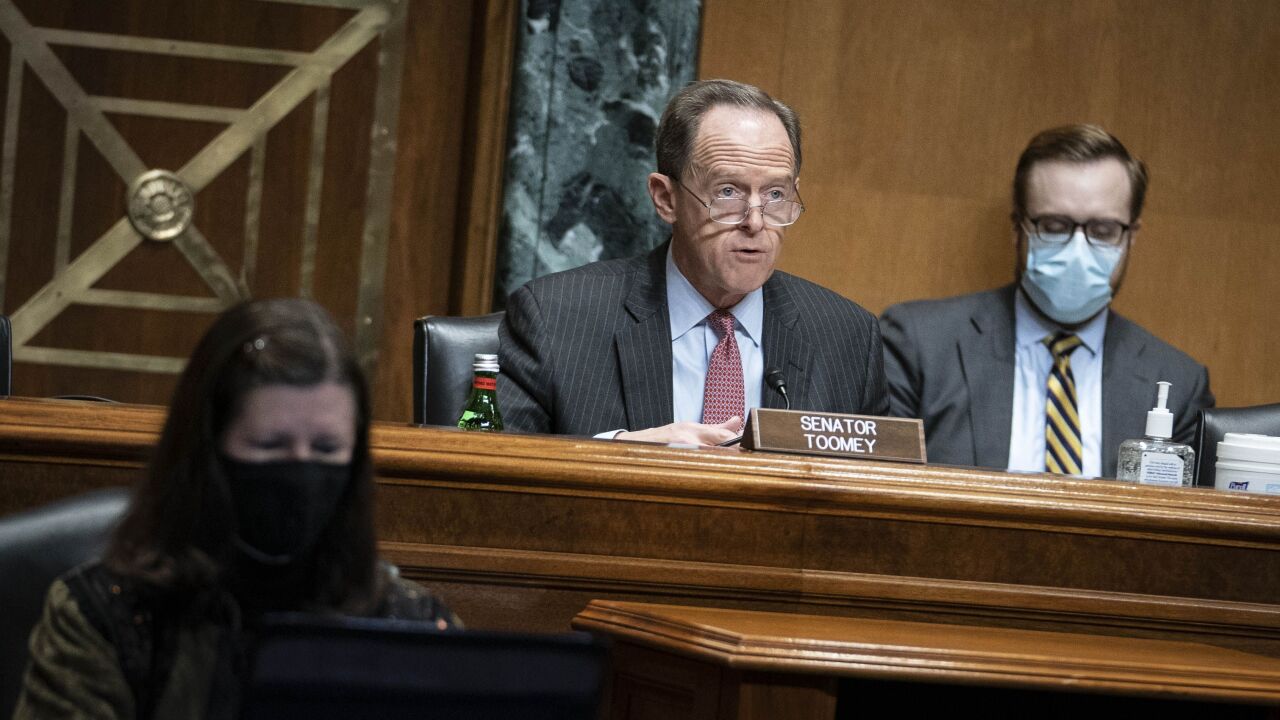
-
Noninterest income has bolstered profits this year. But its growth is expected to slow over the next two years, making for a gloomy earnings outlook unless vaccine distributions and the economic recovery are relatively swift.
December 17


