
-
Mortgage rates fell this week to the lowest level ever recorded by Freddie Mac, even as it appears the relationship to the benchmark 10-year Treasury yield has stabilized.
 May 28
-
Mortgage applications increased 2.7% from one week earlier, as purchase volume is now outpacing the prior year's activity, according to the Mortgage Bankers Association.
May 27
-
Mortgage rates declined this past week, further continuing to help attract previously reluctant buyers back into the purchase market, according to Freddie Mac.
May 21
-
Mortgage applications decreased 2.6% from one week earlier, as tighter underwriting drove the refinance index to its lowest level since March, according to the Mortgage Bankers Association.
May 20
-
Pent-up demand is already pushing buyers to a gradual return to the market, the report asserts.
 May 18
-
While overall mortgage application volume remained flat, purchase activity continued to rebound — and that should be the case through the remainder of the spring, according to the Mortgage Bankers Association.
May 13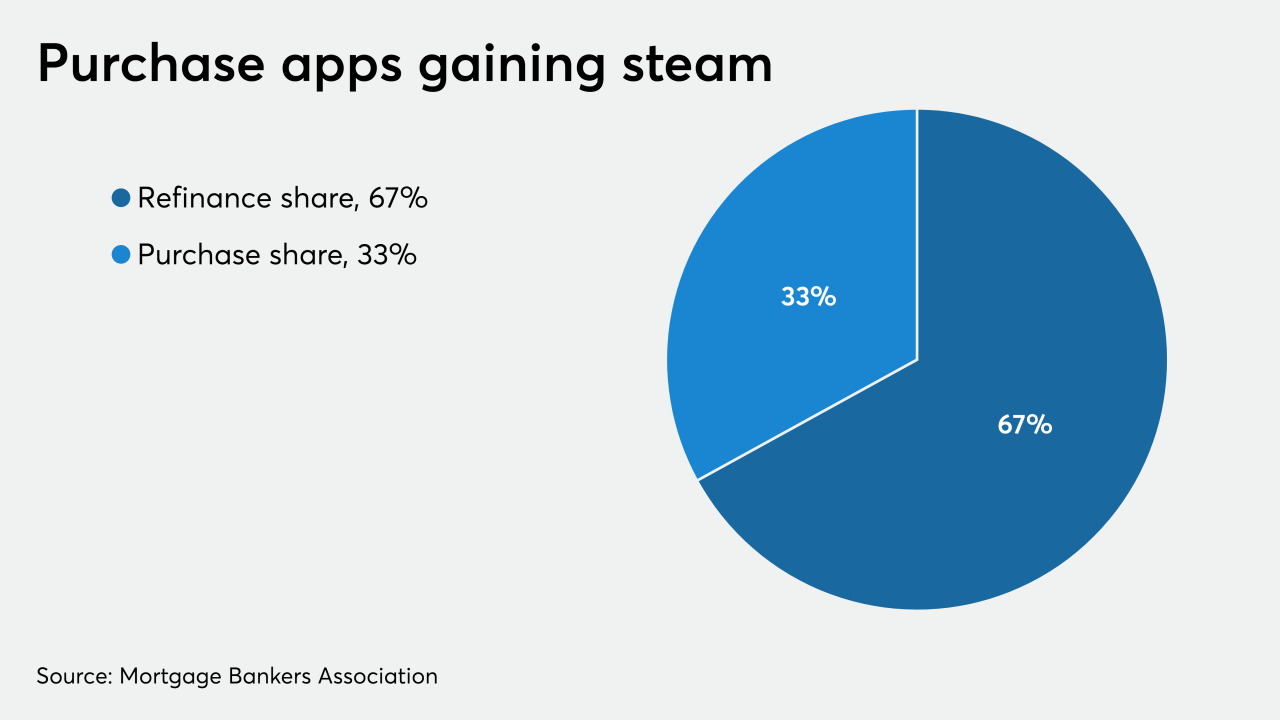
-
Purchase mortgage activity rose for the third consecutive week, although the total volume was flat compared with the previous seven-day period, according to the Mortgage Bankers Association.
May 6
-
Less competition in the marketplace meant customers were less apt to fudge the truth on a loan application.
May 4
-
Even though mortgage application volume decreased from one week earlier, lenders had their best week for purchase business since the coronavirus shutdown began, according to the Mortgage Bankers Association.
April 29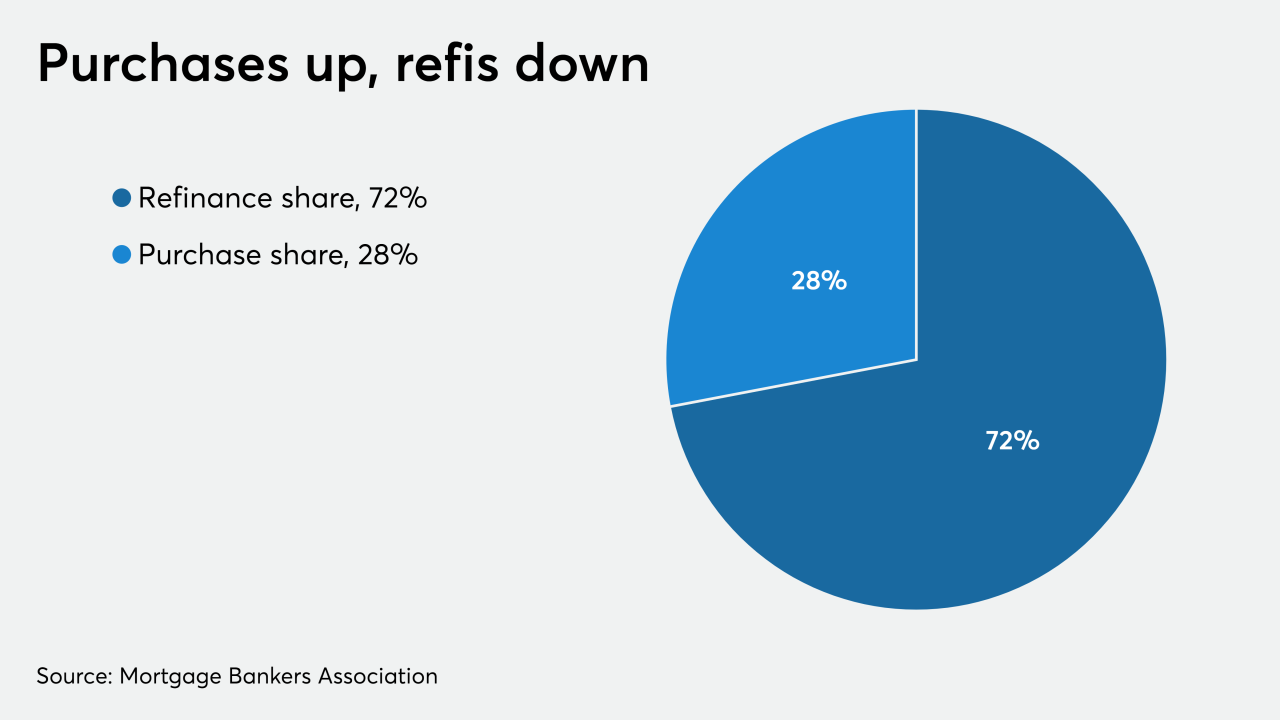
-
-
-
Sales of new homes slid in March by the most since 2013 as the coronavirus started to wreak havoc on the country’s economy.
April 23
-
Mortgage applications decreased 0.3% from one week earlier, although purchase activity was higher for the first time in six weeks, according to the Mortgage Bankers Association.
April 22
-
Efforts to calm lenders’ fears about coronavirus-related forbearance may not offset tightening standards, and the FHA is less likely to boost volume than it was during the financial crisis.
April 21
-
The nation's largest bank is temporarily reducing its exposure to the mortgage market amid rising unemployment and estimates that home prices could drop by 10%.
 April 16
-
The move is part of an effort by CFPB Director Kathy Kraninger to help smaller lenders by significantly raising loan thresholds for collecting and reporting mortgage data.
April 16
-
Mortgage application volume increased 7.3% over the prior week, as rates for the 30-year fixed loan reached the lowest level since the Mortgage Bankers Association started tracking this information.
April 15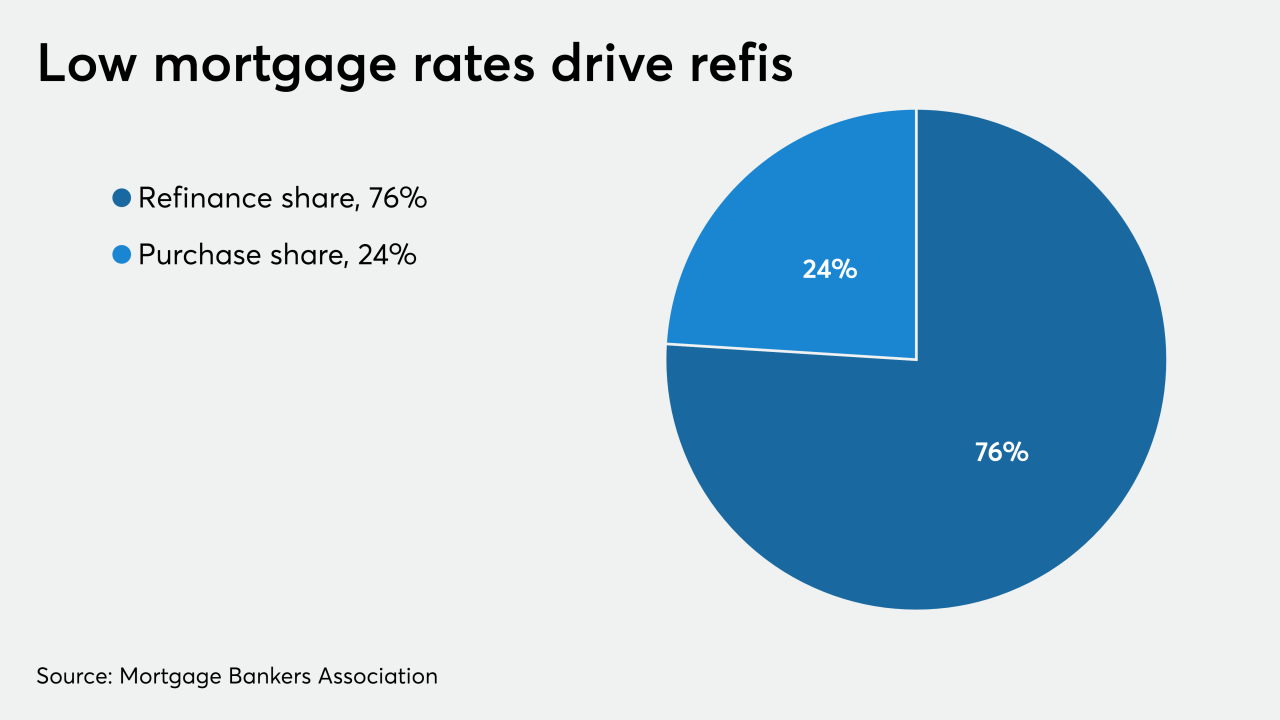
-
Homebuilders in the Twin Cities kept the construction spigot open during March amid growing concerns about the COVID-19 pandemic.
April 10
-
Mortgage applications decreased 17.9% from one week earlier, as coronavirus-related volatility affected consumer sentiment, according to the Mortgage Bankers Association.
April 8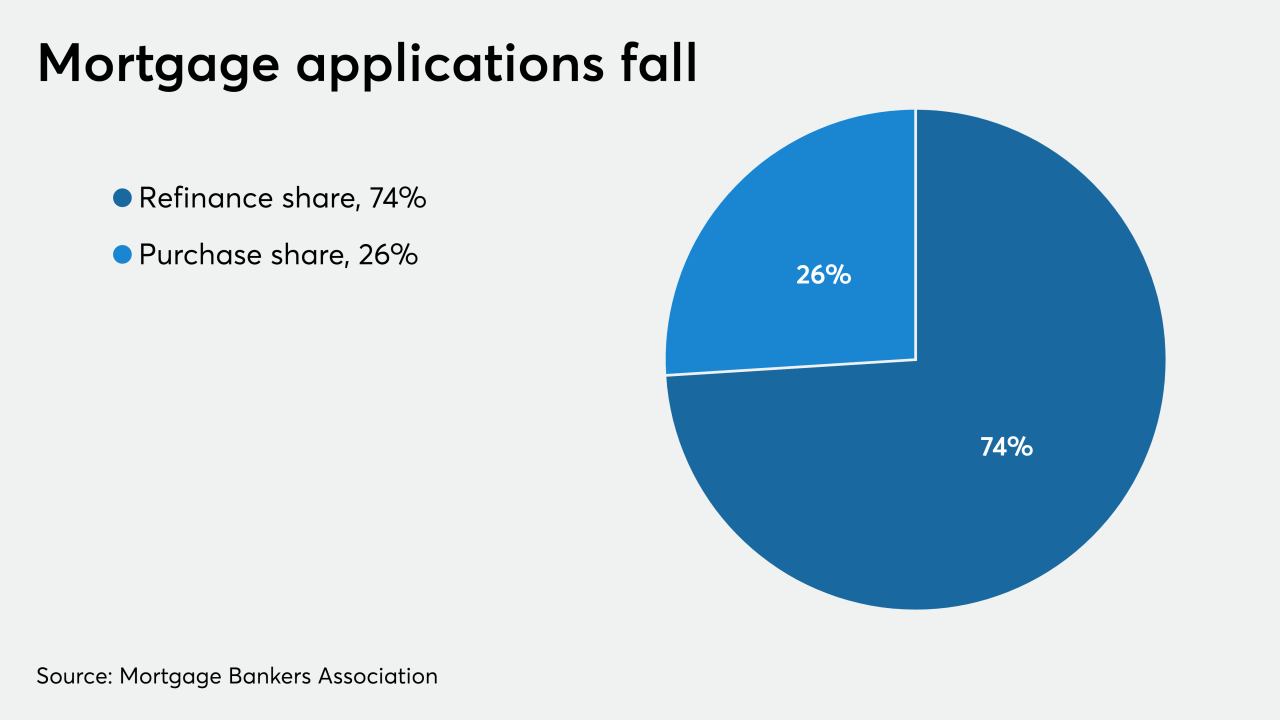
-
Mortgage application activity increased from the prior week, driven by strong refinance volume after a 35-basis-point drop in conforming loan interest rates, according to the Mortgage Bankers Association.
April 1


