
Federal Reserve
Federal Reserve
-

The day after the Federal Open Market Committee's next meeting we will analyze the increase and the signals about what rate hikes may be coming.
-
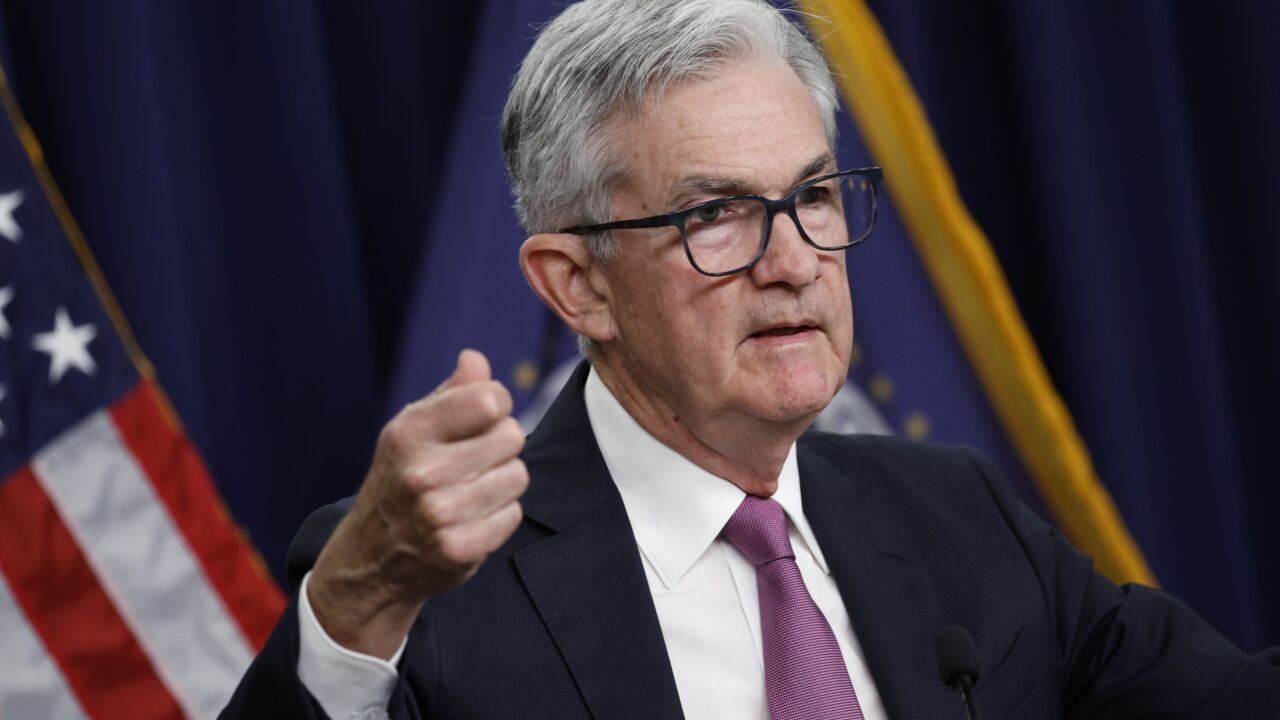
Fed Chairman Jerome Powell brushed off concerns that rapidly tightening monetary policy could disrupt the financial system. Some economists and policy experts beg to differ, raising concerns about loan defaults or even the collapse of a key institution or counterparty.
July 29 -

Analysts say draining reserves from the banking system will reach a practical limit in the first quarter.
July 28 -

Growth is already slowing after its previous increase, but with inflation persisting, it seems a recession is necessary to ease price pressure.
July 25 -

Largely, economists surveyed agreed with the decision by the Fed to continue to raise interest rates to slow inflation.
July 22 -

The Fed's tests have become a menacing countercyclical force that could further drive down liquidity in the mortgage market over the next year, the chairman of Whalen Global Advisors writes.
July 19 -

Following their largest drop in over a decade one week ago, averages rapidly swung upward as recession talk receded.
July 14 -

The figures reaffirm price pressure are rampant and widespread across the economy, and having effect on real wages.
July 13 -

The CRA has failed to reduce anti-Black racial discrimination in financial services, to lower poverty or to lessen environmental destruction.
June 22 -

Some economists see a recession as inevitable but other markers, like the unemployment rate and consumption indicators, point to a resilient economy.
June 22 -

The Federal Reserve has started a hiking cycle that's expected to continue with half-point increases in June and July, Marvin Loh, senior macro strategist at State Street Global Markets, will assess the June Federal Open Market Committee meeting and tell what he expects the panel to do in the future.
-
This is the biggest increase since 1994, and the Federal Reserve signaled it will keep hiking the interest rate until the end of the year.
June 15 -

With half-point interest-rate increases all but certain in June and July, Federal Reserve officials are shifting the focus away from a destination on hikes to something that’s trickier to determine and explain: the broader impact of their policies on the economy.
June 6 -

The Federal Reserve is about to start shrinking its $8.9 trillion balance sheet, deploying a second tool along side higher interest rates to curb inflation, though officials don’t know just how effective it will be.
June 1 -

President Biden used a rare meeting with Federal Reserve Chair Jerome Powell to declare that he’s respecting the central bank’s independence — while simultaneously shifting responsibility for taming decades-high inflation ahead of the November midterms.
May 31 -

The Treasuries market is girding for potential disruptions from the next and trickiest stage of policymakers’ tightening campaign: the shrinking of an $8.5 trillion bond portfolio.
May 25 -

Federal Reserve Bank of Atlanta President Raphael Bostic said policy makers could potentially pause interest-rate increases in September after hiking by a half point at each of their next two meetings.
May 23 -

The world’s richest nation is waking up to an unpleasant and unfamiliar sensation: It’s getting poorer.
May 23 -

The central bank has a long history of diluting the effectiveness of the Community Reinvestment Act.
May 18 -

Signs of deteriorating liquidity in U.S. Treasuries, such as measures of market depth and bid-ask spreads, are “more or less in line with the increase in volatility in markets,” New York Fed President John Williams said Monday.
May 16


