
-
Tenants have threatened to suspend payments during the pandemic to pressure officials into providing rental assistance, but the effects on multifamily loans would compound concerns about servicers' liquidity and, ultimately, lenders' performance.
April 13
-
Mortgage applications decreased 17.9% from one week earlier, as coronavirus-related volatility affected consumer sentiment, according to the Mortgage Bankers Association.
 April 8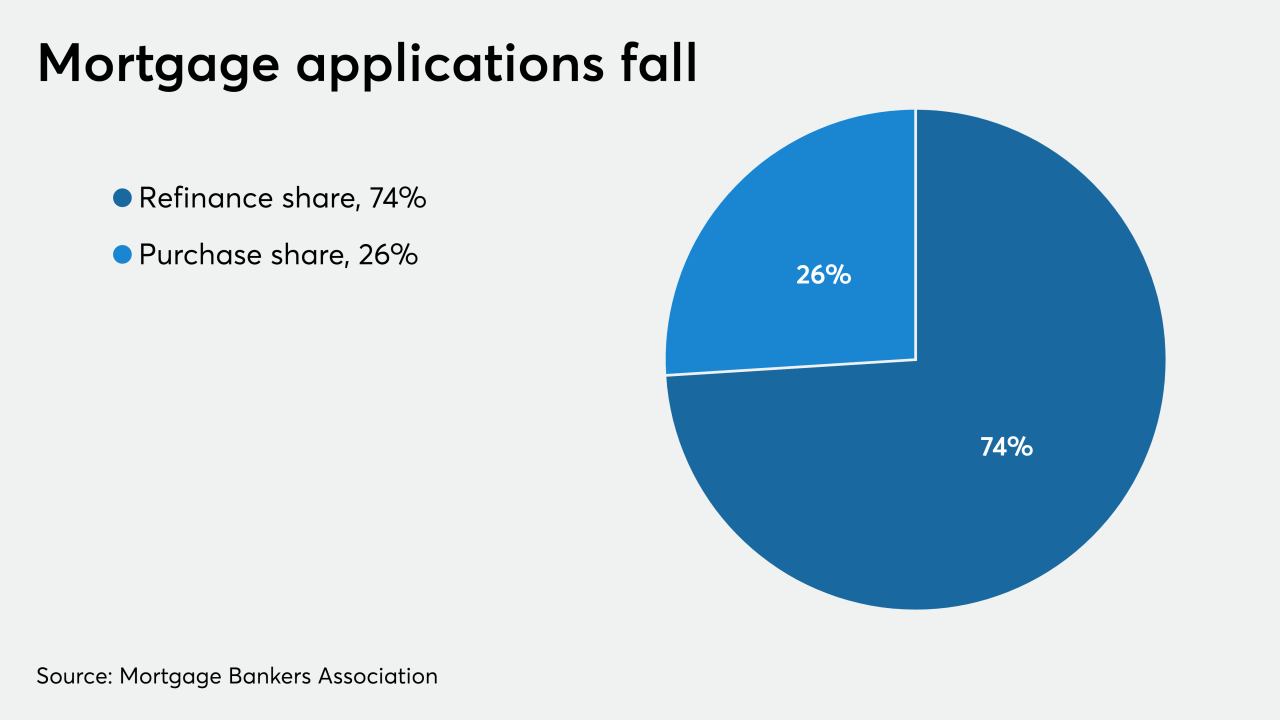
-
The CARES Act does not define what a covered period is when it comes to residential mortgage borrower requests for forbearance.
April 7 McCarter & English LLP
 -
Ginnie Mae and the FHA provided temporary liquidity relief for mortgage servicers bracing for higher delinquencies, but the industry continues to pressure Treasury and the Fed to provide more comprehensive support.
 April 6
-
Finance of America Reverse agreed to pay $2.5 million to settle allegations that a company it acquired violated the False Claims Act for loans submitted for Federal Housing Administration insurance in 2010.
 April 2
-
Mortgage application activity increased from the prior week, driven by strong refinance volume after a 35-basis-point drop in conforming loan interest rates, according to the Mortgage Bankers Association.
April 1
-
Mortgage servicers need direction from federal agencies on how to implement the forbearance plans called for in the CARES Act, according to the Community Home Lenders Association.
March 31
-
A top U.S. regulator is exploring whether to throw a lifeline to mortgage servicers stressed by the coronavirus pandemic by tapping a program meant to address natural disasters.
March 27
-
The government is cushioning the impact of the coronavirus on consumers, but independent mortgage bankers need funding to deal with increased levels of servicing advances because of forbearances.
March 27 Community Home Lenders of America
 -
As real estate prices soared in recent years, working-class adults everywhere have increasingly relied on mortgages backed by the Federal Housing Administration — and U.S. taxpayers.
March 25
-
The Department of Housing and Urban Development's 60-day foreclosure halt for Federal Housing Administration borrowers is too short to help reverse mortgage borrowers, a letter from consumer groups stated.
March 25
-
There was a nearly 30% week-to-week decline in loan applications as Americans reacted to the uncertainty, both economic and medical, from the spread of COVID-19, according to the Mortgage Bankers Association.
March 25
-
The temporary foreclosure moratorium on loans backed by HUD, Fannie Mae and Freddie Mac comes after lawmakers and housing advocates had pushed for steps to avoid consumers getting booted from their homes.
March 18
-
Mortgage application volume decreased 8.4% compared with one week earlier as lenders managed activity by raising rates even as 10-year Treasury yields fell below 1%, according to the Mortgage Bankers Association.
March 18
-
The Federal Housing Administration is making coronavirus adjustments while warning of possible delays as the industry anticipates a new wave of borrowing due to the Federal Reserve's latest short-term rate cut.
 March 16
-
A national moratorium would be costly to lenders and servicers, but proponents say it's needed to help cushion the economic blow of the pandemic.
March 15
-
The Mortgage Bankers Association raised its refinance projections for 2020, a move precipitated by an application volume increase of 55.4% from one week earlier.
March 11
-
January's plummeting mortgage rates led to a spike in the share of millennials refinancing their home loans, a trend that should carry into February and March, according to Ellie Mae.
 March 5
-
The dollar amount of fix-and-flip properties purchased using financing reached a 13-year high in 2019, but the share of flips financed was lower year-over-year, according to Attom Data Solutions.
March 5
-
Endorsements of Home Equity Conversion Mortgages fell nearly 14% on a consecutive-month basis in February after a January surge, but stayed relatively strong compared to average levels last year.
March 5


