
-
A rise in coronavirus cases and the removal of a 50-basis-point adverse market fee designed to protect Fannie Mae and Freddie Mac during the pandemic contributed to the largest weekly drop so far this year.
July 22
-
Despite lower numbers, refi applications continued trending strongly, while purchases fell close to lows from more than a year ago.
July 21
-
The adverse market fee change could contribute to an increase in refinance volume, adds Mortgage Bankers Association economist Mike Fratantoni.
July 19
-
The GSE forecasts $4 trillion in production this year because refinance activity is stronger than expected.
July 16
-
Purchase loans also increase, as their average size shrinks
July 14
-
Boosts in purchases and cash-out refinances drove the summer turnaround, according to Black Knight.
July 12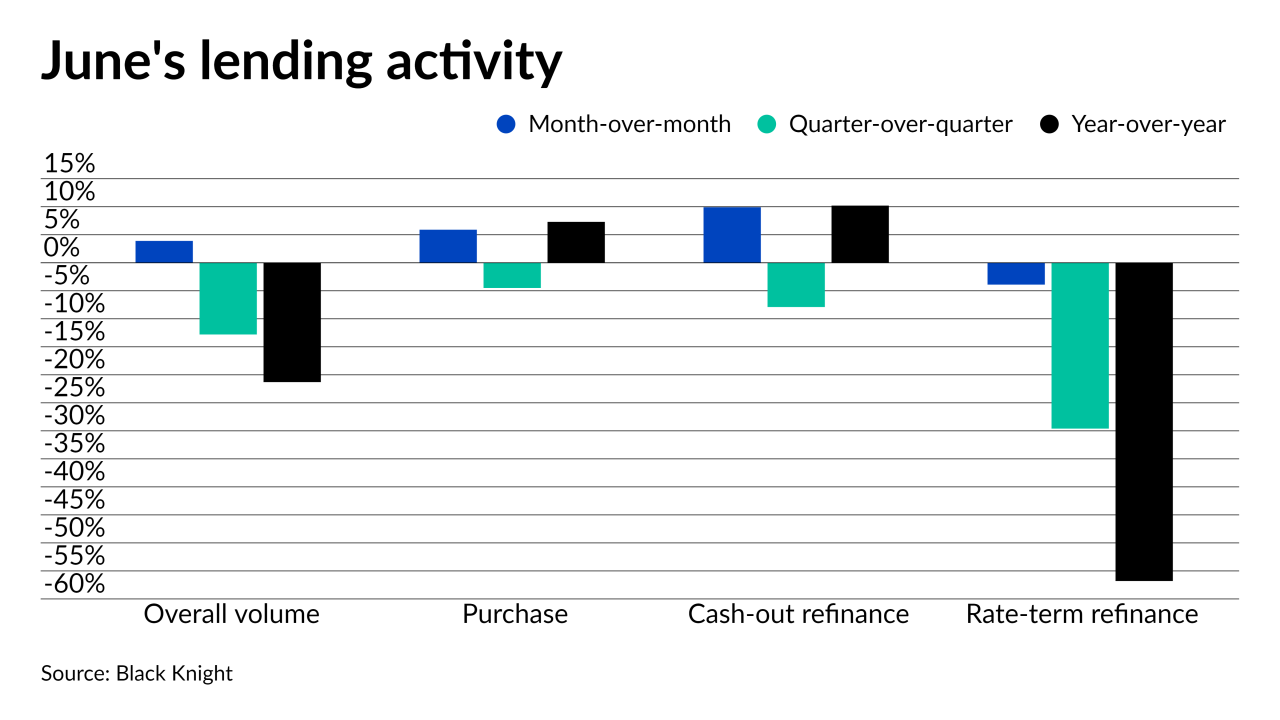
-
Still, the average time a property is on the market is at an all-time low, with more than half going into contract within two weeks.
July 9
-
With talk of an overheating economy abating, economists see few signals that would indicate near-term rate spikes.
July 8
-
But some local markets in the Midwest and oil regions are seeing a lag compared to nationwide annual gains, Veros Real Estate Solutions found.
July 8
-
The dynamic between housing market players diverged to an even greater degree amid intense demand and surging home prices, according to Fannie Mae.
July 7
-
Government-sponsored loans gain volume share, but overall numbers tumble to a point not seen since before the pandemic.
July 7
-
Markets react calmly to inflationary worries, but short supply and rising home prices loom as a greater concern.
July 1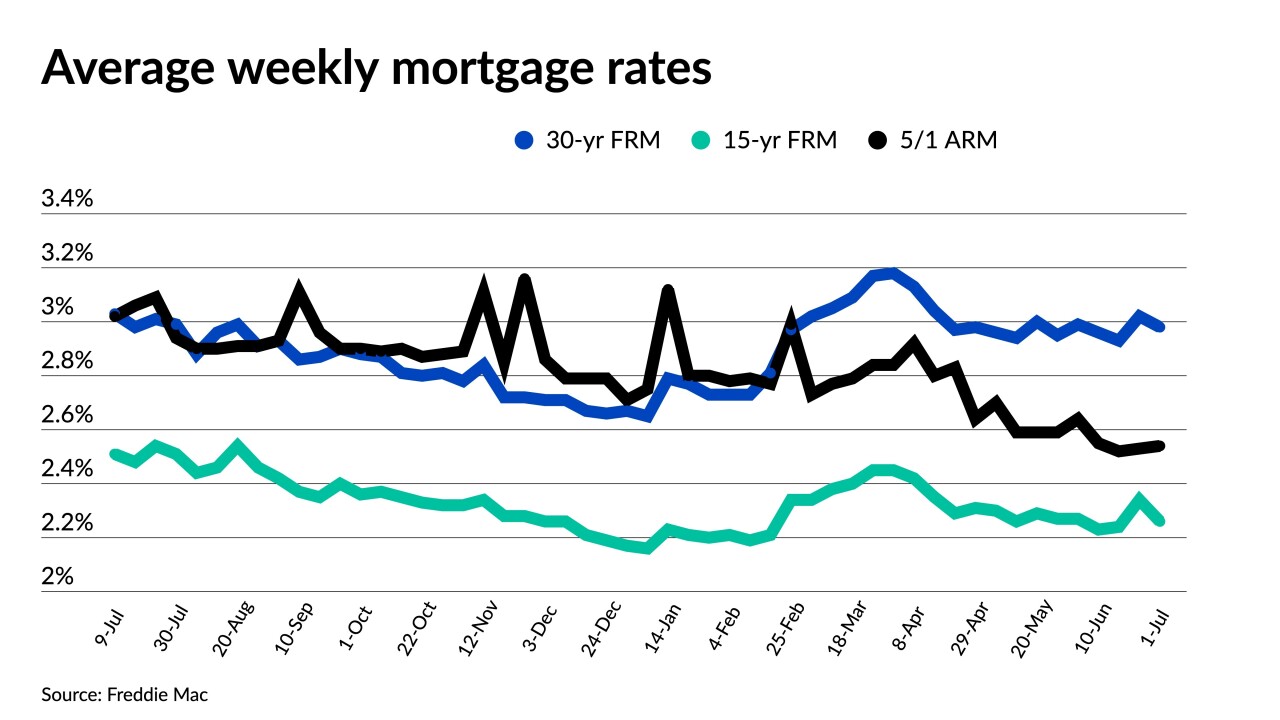
-
Limited housing supply, climbing rates cause applications to decline across the board.
June 30
-
While purchasing power grew for the 16th straight month in April, surging property values and increased mortgage rate forecasts will keep driving down affordability, according to First American.
June 28
-
Median home prices are higher than the historical average in 61% of U.S. counties, Attom Data Solutions said, and it's unclear if the situation gets better or worse.
June 24
-
Corresponding Treasury yields seesawed over the past week, as some experts see “transitory” inflation persisting.
June 24
-
Increases in refinances, both in applications and average size, help lead overall numbers higher
June 23
-
While purchasing power rose due to low rates and increasing income, “homebodies” suppressed inventory, according to First American.
June 22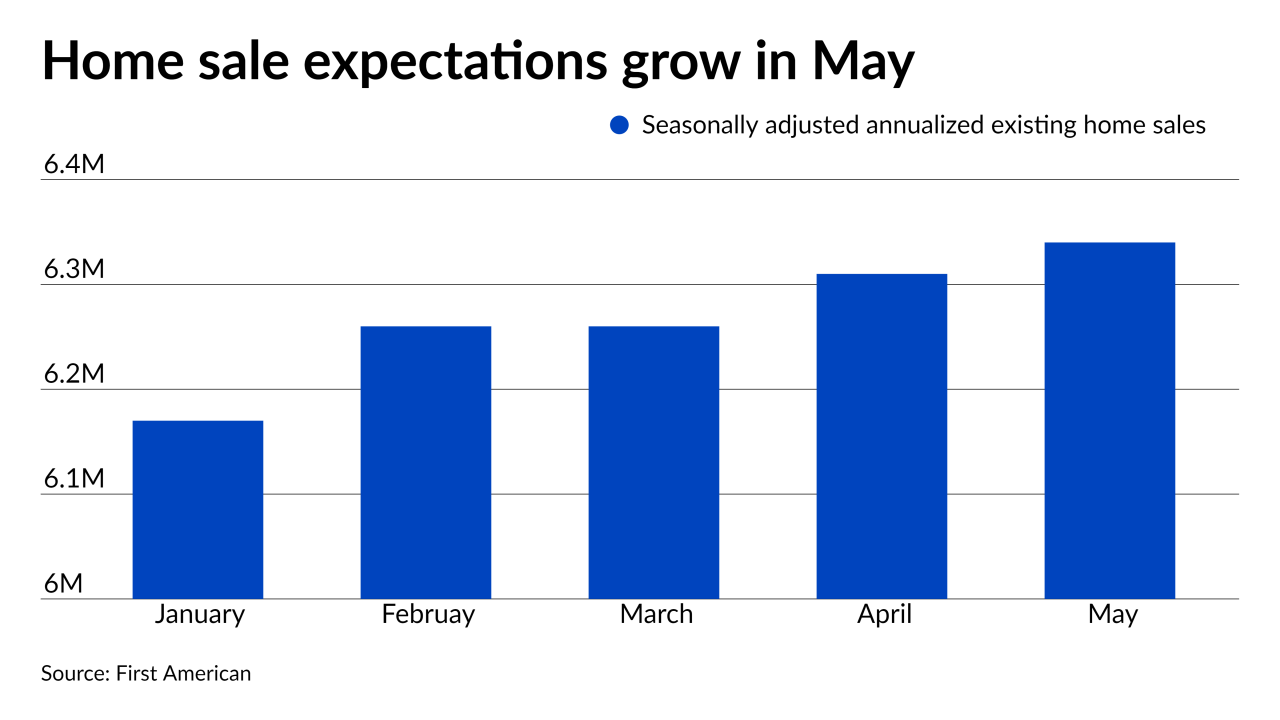
-
Signs from the Fed regarding tapering and interest rate hikes could spell the end to the year’s low rates.
June 17
-
A spike in government-sponsored applications helped lead indexes to their largest gains in several weeks.
June 16


